As 5 Quick Breathing Exercises for Stressful Situations takes center stage, this opening passage beckons readers with warm minang communication style into a world crafted with good knowledge, ensuring a reading experience that is both absorbing and distinctly original.
Breathing exercises are powerful tools for managing stress in daily life. Learn how these techniques can bring calm and relief in challenging situations.
Introduction to Breathing Exercises: 5 Quick Breathing Exercises For Stressful Situations
Breathing exercises are a powerful tool for managing stressful situations as they have a direct impact on our body’s stress response. By focusing on our breath, we can regulate our nervous system, reduce anxiety, and promote a sense of calmness and relaxation.The connection between breathing and stress relief lies in the fact that deep, intentional breathing activates the body’s parasympathetic nervous system, also known as the “rest and digest” system.
This helps counteract the effects of the sympathetic nervous system, which is responsible for the body’s stress response.Incorporating breathing techniques into daily routines is crucial for overall well-being and mental health. By practicing these exercises regularly, we can build resilience to stress, improve our emotional regulation, and enhance our ability to cope with challenging situations effectively.
The Benefits of Deep Breathing
- Deep breathing increases oxygen flow to the brain, promoting clarity and focus.
- It helps lower heart rate and blood pressure, reducing feelings of tension and anxiety.
- Deep breathing can improve digestion and boost the immune system.
- By focusing on the present moment through breath awareness, we can cultivate mindfulness and reduce rumination on stressful thoughts.
Diaphragmatic Breathing
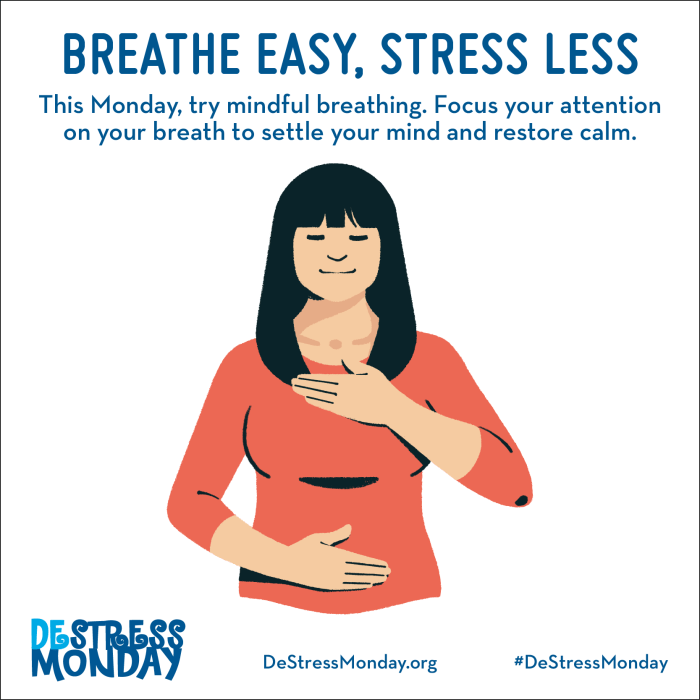
Diaphragmatic breathing, also known as belly breathing or deep breathing, is a technique that involves engaging the diaphragm, a dome-shaped muscle located at the base of the lungs. This type of breathing is known to be effective in reducing stress and promoting relaxation.
Role in Stress Reduction
Diaphragmatic breathing plays a crucial role in stress reduction by activating the body’s relaxation response. When practiced regularly, it can help lower heart rate, reduce blood pressure, and calm the mind.
How it Differs from Normal Breathing
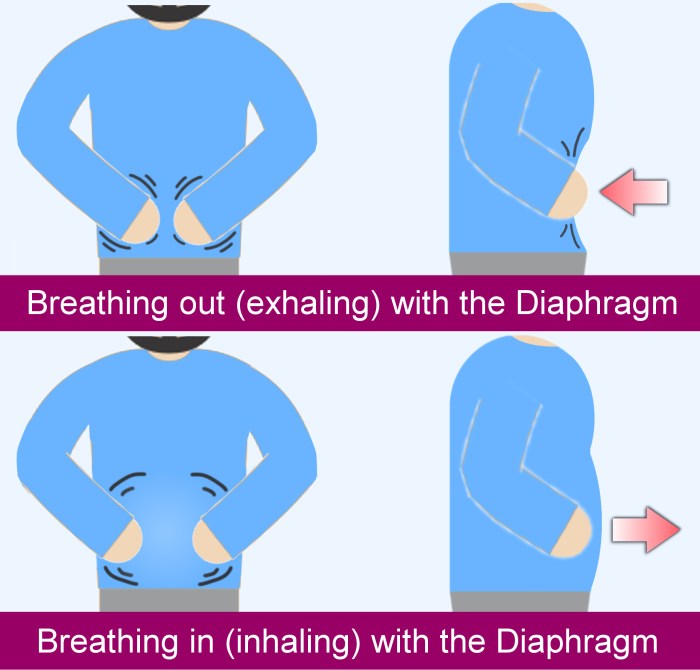
- During diaphragmatic breathing, the focus is on expanding the abdomen rather than the chest.
- Normal breathing typically involves shallow chest breathing, while diaphragmatic breathing engages the diaphragm for deeper breaths.
- Diaphragmatic breathing allows for more oxygen to enter the body, promoting a sense of calm and reducing stress levels.
Steps to Practice Diaphragmatic Breathing
- Sit or lie down in a comfortable position.
- Place one hand on your chest and the other on your abdomen.
- Inhale slowly through your nose, feeling your abdomen rise as you fill your lungs with air.
- Exhale slowly through your mouth, allowing your abdomen to fall as you release the air.
- Repeat this process for several minutes, focusing on the movement of your abdomen with each breath.
Box Breathing Technique
The Box Breathing Technique is a powerful method to calm the mind and reduce stress levels. This technique involves a simple four-stage breathing pattern that can be easily practiced anywhere, anytime.
Stages of Box Breathing
- Inhale: Begin by inhaling deeply through your nose for a count of four seconds. Fill your lungs with air and expand your diaphragm.
- Hold: Once you have taken a full breath, hold the air in your lungs for another four seconds. Focus on keeping your breath steady and controlled.
- Exhale: Slowly exhale through your mouth for a count of four seconds. Release all the air from your lungs and feel the tension leaving your body.
- Hold: After exhaling completely, hold your breath for another four seconds before starting the cycle again.
Tip: Repeat this four-stage breathing cycle for a few minutes to experience the calming effects of the Box Breathing Technique.
4-7-8 Breathing Exercise
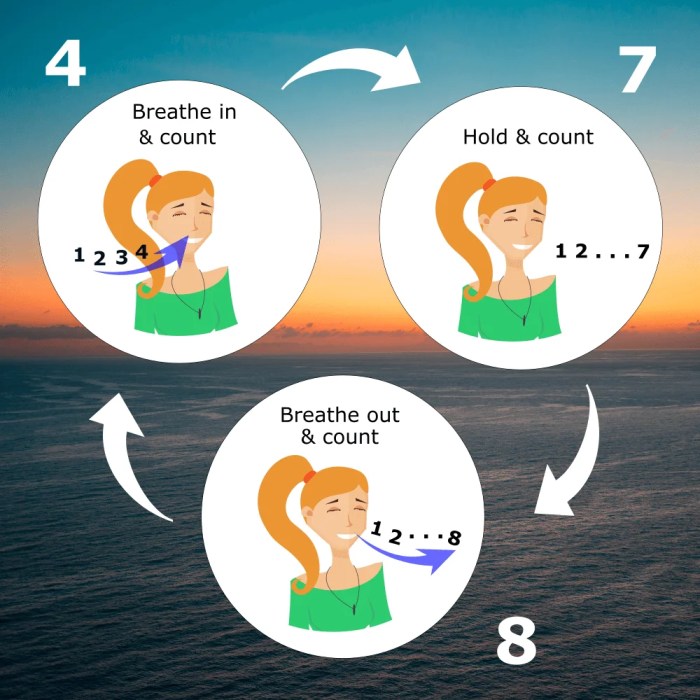
The 4-7-8 breathing exercise is a simple yet effective technique used to reduce stress and anxiety levels. This technique involves a specific breathing pattern that helps calm the mind and body, promoting relaxation and a sense of well-being.
Impact on Stress and Anxiety
- The 4-7-8 breathing exercise can help lower stress levels by activating the body’s relaxation response.
- By focusing on the breath and practicing deep breathing, individuals can reduce anxiety and promote feelings of calmness.
Specific Breathing Pattern
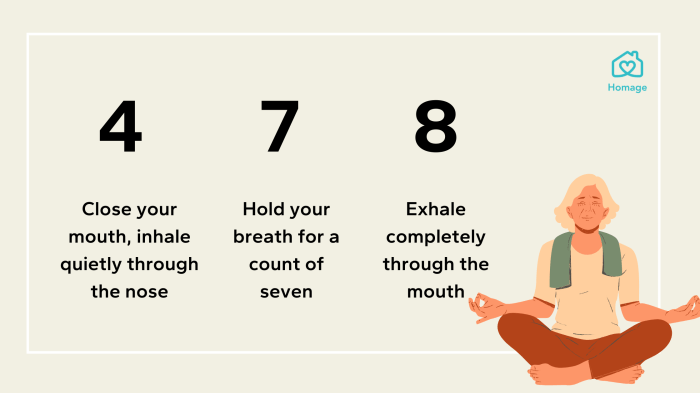
- To perform the 4-7-8 breathing exercise, start by inhaling quietly through your nose for a count of 4 seconds.
- Hold your breath for 7 seconds.
- Exhale slowly and completely through your mouth for 8 seconds.
- Repeat this cycle for a few minutes to experience the calming effects of this breathing technique.
Variations and Modifications
- If the 4-7-8 pattern feels challenging, you can adjust the counts to a pace that is comfortable for you, such as 3-5-6 or 5-8-10.
- Some individuals may prefer to practice this breathing exercise lying down or with their eyes closed to enhance relaxation.
Alternate Nostril Breathing
Alternate nostril breathing is a powerful technique rooted in ancient yogic practices that can help alleviate stress and promote relaxation. By focusing on alternating the flow of breath between the left and right nostrils, this practice aims to balance the body’s energy and calm the mind.
Benefits of Alternate Nostril Breathing
- Reduces stress and anxiety levels
- Improves focus and concentration
- Promotes a sense of calm and relaxation
- Helps balance the body’s energy channels
Process of Alternate Nostril Breathing, 5 Quick Breathing Exercises for Stressful Situations
To practice alternate nostril breathing, sit comfortably with a straight spine. Use your right thumb to close your right nostril and inhale deeply through your left nostril. At the peak of inhalation, close your left nostril with your right ring finger, release your thumb from the right nostril, and exhale through the right nostril. Inhale through the right nostril, close it with your thumb, release the left nostril, and exhale through the left nostril.
This completes one cycle. Repeat for several rounds.
Closure
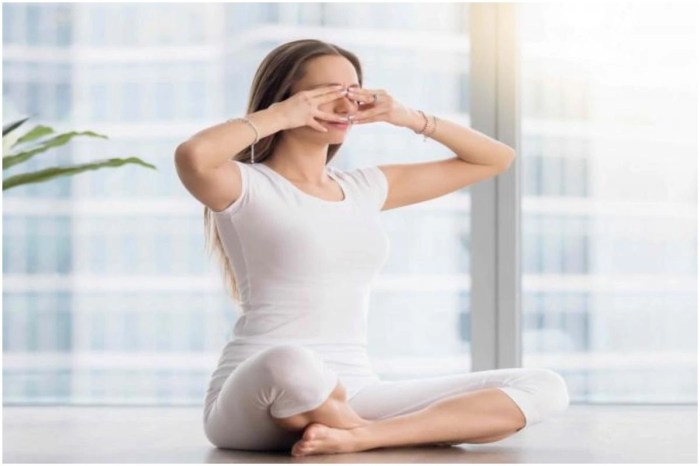
In conclusion, mastering these 5 quick breathing exercises can be a game-changer for navigating stressful moments with grace and composure. Take a deep breath, practice regularly, and feel the stress melt away as you embrace a more peaceful state of mind.